ne bad. Discard Spam immediately if you notice:
A bulging, warped, or swollen can (this is a major red flag that indicates bacterial gas production inside)
Liquid leaking from the can before opening it
Deep rust, severe dents, or damage along the seams of the metal container
A sour, rancid, or otherwise “off” smell after opening the lid
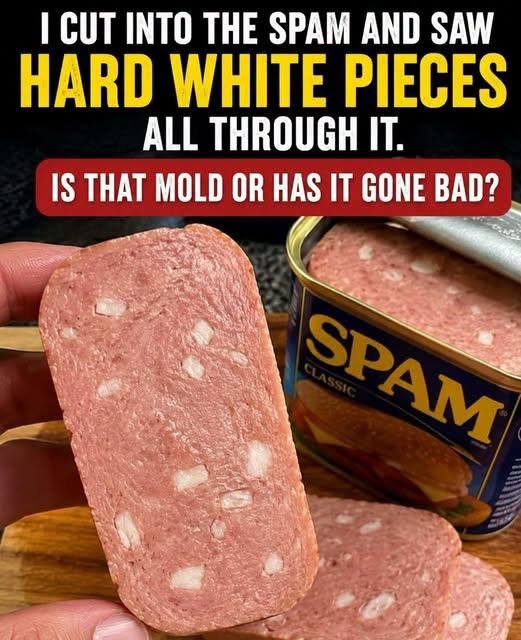
Slimy texture or unusual discoloration (gray, green, or black patches) on the meat
Can safety depends entirely on maintaining an intact seal. Once that seal fails, bacteria can enter and multiply. When in doubt, throw it out—but if the can is intact, the smell is normal, and the only unusual feature is white fat specks, your Spam is safe to eat.
A practical rule: When evaluating packaged foods, the condition of the packaging and the product’s smell are far more reliable indicators of safety than visual aesthetics alone. Simple appearance checks can sometimes play tricks on us, but our senses rarely do.
“What Happens When You Cook It?”
Here’s the most reassuring part: those white fat lumps don’t just disappear—they transform into something delicious.
When cold, pork fat is solid and white. When heated, it melts into a clear, liquid state. As you fry or bake Spam, the fat gently renders, absorbing into the surrounding meat. This is precisely why cooked Spam develops its signature juicy interior and crispy, caramelized exterior.
See next page
For Complete Cooking STEPS Please Head On Over To Next Page Or Open button (>)